
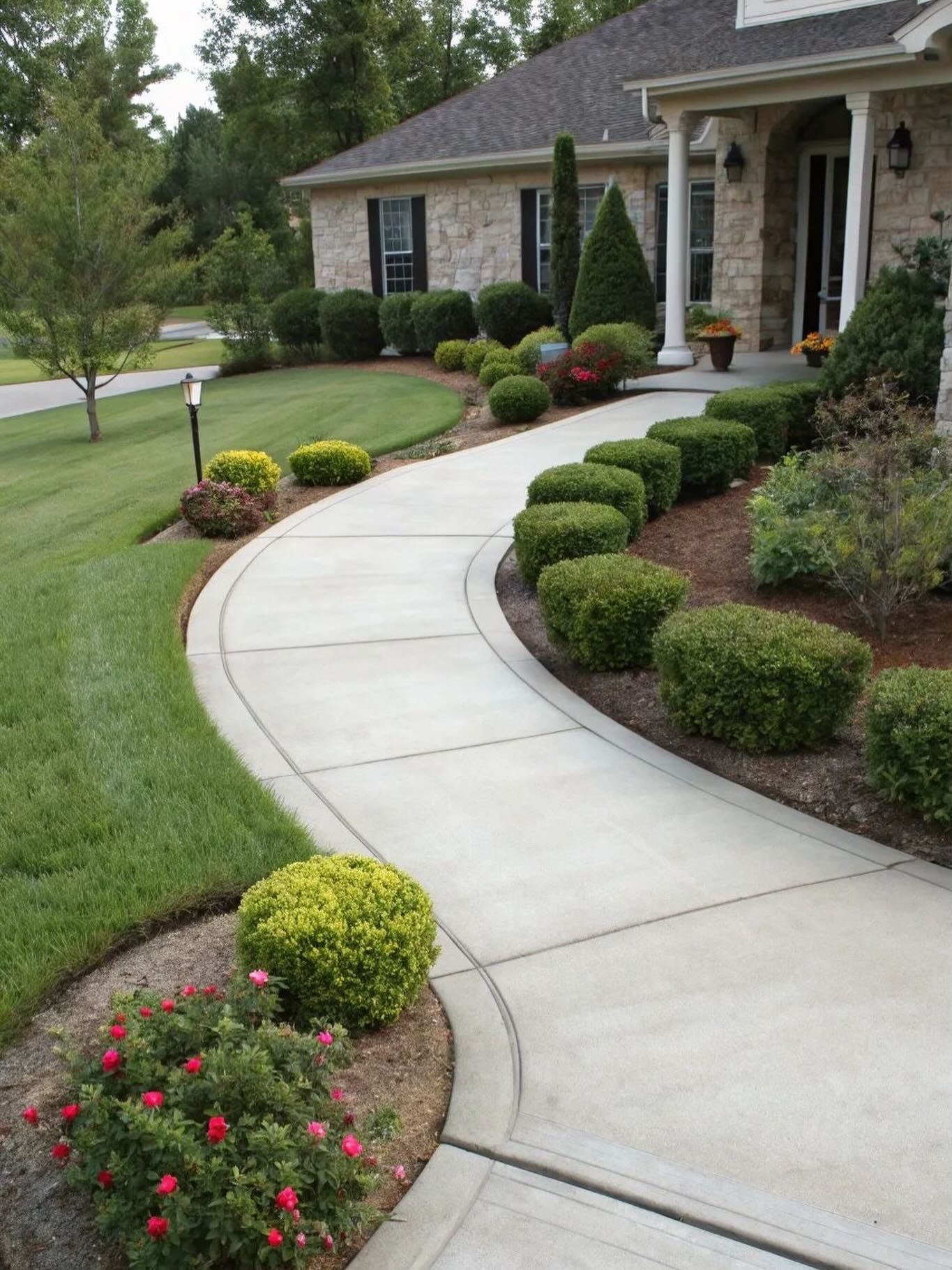
Accessible Pathways That Meet Local Standards
Sidewalks in Bakersfield for properties requiring safe pedestrian access and ADA-compliant walkways
Cracked or uneven sidewalks create trip hazards that pose liability concerns for property owners and limit accessibility for residents with mobility challenges. S & L Concrete LLC installs and repairs concrete sidewalks that meet local building standards for width, slope, and surface finish while providing long-term durability under foot traffic and weather exposure. Sidewalk work addresses properties where existing sections show displacement from tree root intrusion, surface spalling from freeze-thaw cycles, or inadequate width that fails to meet current accessibility requirements in Bakersfield.
Sidewalk construction begins with excavation to stable subgrade, followed by aggregate base installation and compaction that prevents settling. Proper slope directs water off the walking surface toward drainage areas, and control joints are placed at regular intervals to manage shrinkage cracking in predictable locations. Broom finishes provide traction even when wet, which matters for sections exposed to irrigation overspray or rain runoff. Replacement projects include removing damaged sections and tying new concrete into existing slabs with dowels that maintain elevation alignment.
Schedule a project estimate to review your property's sidewalk condition and discuss repair options versus full replacement.
What You Notice Once Sidewalk Work Is Finished
New or repaired sidewalks eliminate lippage between sections, creating smooth transitions that prevent tripping and allow wheeled devices to roll without catching on uneven joints. The surface remains level across its width without puddling that collects during rain or creates icy patches in rare freeze events. Clean edges along planting strips and driveways define property boundaries clearly, and the uniform finish matches existing concrete work when repairs are isolated to specific panels.
Once installation is complete, the sidewalk provides reliable access from street to entry points without navigating around cracked sections or vegetation encroaching onto the walking surface. Properly placed control joints create straight lines that appear intentional rather than random cracks that develop when joints are omitted. For commercial properties, compliant sidewalks reduce liability exposure and ensure customers can access building entrances regardless of mobility limitations.
Sidewalk projects can include decorative elements such as exposed aggregate borders or scored patterns that add visual interest while maintaining functional performance. Residential installations typically follow municipal right-of-way requirements for placement and width, while private walkways on commercial properties allow greater design flexibility within accessibility guidelines.
Questions Before Starting Your Project
Homeowners and property managers often need clarity on repair versus replacement decisions, compliance requirements, and maintenance expectations.
When should sidewalks be replaced instead of repaired?
Replacement makes sense when multiple sections show displacement, when tree roots have compromised the subgrade across large areas, or when existing width fails to meet current accessibility standards.
How wide do sidewalks need to be?
Residential sidewalks typically range from four to five feet wide, though accessibility guidelines recommend five feet to allow two wheelchairs to pass, and commercial properties may require wider paths depending on expected traffic.
What causes sidewalk sections to lift or sink?
Lifting usually results from tree root growth beneath the slab, while sinking occurs when base material washes out or wasn't adequately compacted during initial installation.
Can decorative finishes be used on sidewalks?
Decorative options such as colored concrete, exposed aggregate, or light stamping can be applied while maintaining the slip resistance and durability required for pedestrian traffic.
How long before sidewalks can be used after installation?
Foot traffic is generally safe after 24 hours, though full strength development takes seven days, and heavy loads or vehicular crossings should wait until concrete reaches design strength.
S & L Concrete LLC evaluates existing sidewalk conditions and provides recommendations that balance repair feasibility with long-term performance expectations. Reach out to discuss your property's accessibility needs and receive detailed estimates that account for site-specific grading and tie-in requirements.