Floors That Handle Daily Wear and Spills
Epoxy Coatings in Bakersfield for garages and commercial spaces exposed to constant traffic and chemical contact
S & L Concrete Inc applies epoxy floor coatings across Bakersfield to create surfaces that withstand the repeated impact, fluid exposure, and abrasion common in both residential garages and commercial facilities. You're dealing with a flooring solution that bonds directly to prepared concrete, forming a hardened layer that resists penetration from automotive fluids, cleaning agents, and the wear patterns created by foot traffic or equipment movement. The coating transforms porous concrete into a sealed, non-absorbent surface that no longer traps stains or deteriorates from chemical contact.
The application process involves surface preparation through grinding or shot blasting to open the concrete's pores, followed by the mixture and application of resin and hardener components that cure into a rigid, bonded layer. In Bakersfield's dry climate, the curing process proceeds predictably without the humidity-related adhesion issues seen in coastal regions, allowing the epoxy to achieve full mechanical bond strength. This matters for spaces where heavy equipment, vehicle tires, or constant foot traffic would otherwise wear through lesser coatings or damage untreated concrete.
Request a surface evaluation to determine the preparation requirements and coating specifications for your garage or commercial floor.
What Proper Epoxy Application Requires
The concrete substrate must be profiled to a specific roughness standard before any coating material contacts the surface, which typically requires diamond grinding equipment rather than acid etching alone. You're preparing the slab to accept mechanical adhesion, not just chemical bonding, which determines whether the coating remains intact under thermal expansion cycles and impact loading. The epoxy formulation itself consists of measured resin-to-hardener ratios that affect pot life, cure time, and final hardness properties.
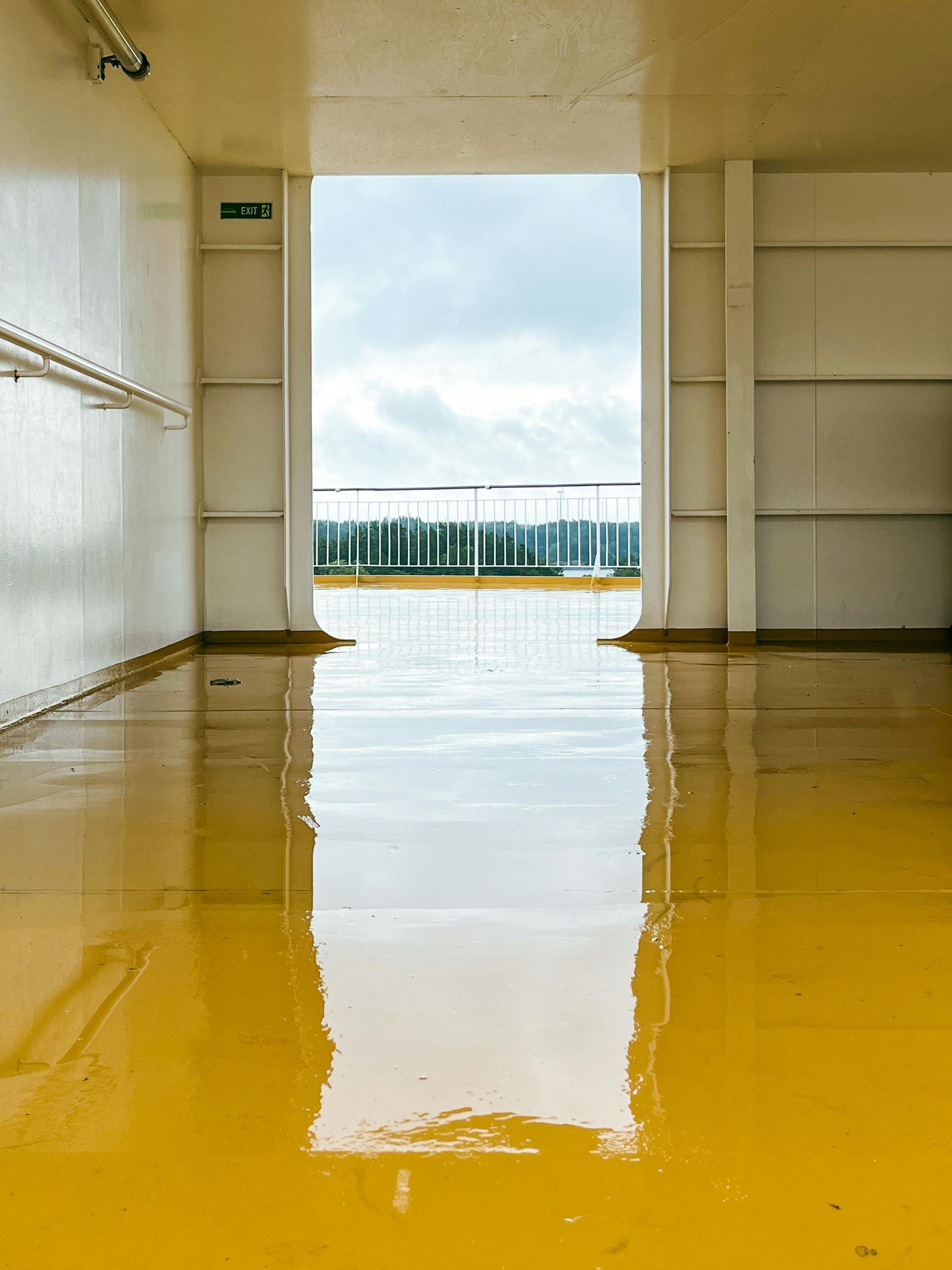
Once cured, your floor displays a glossy, seamless appearance that reflects overhead lighting and shows no grout lines or seams where contaminants can accumulate. Oil drips, brake fluid, gasoline, and common solvents sit on the surface rather than penetrating into the concrete matrix, which means cleanup involves wiping rather than scrubbing or attempting to draw stains out of porous material. The coating also prevents concrete dusting, which is the chalky residue that untreated garage floors continuously shed as the surface erodes microscopically under abrasion.
The system performs best when applied to concrete that has cured for at least 28 days and shows no active moisture migration from below, which can be verified through calcium chloride testing or plastic sheet testing. Some formulations include broadcast aggregate or decorative flake additives for slip resistance or visual texture, while others remain as smooth, high-gloss finishes suited to showroom environments or spaces prioritizing easy cleaning over traction enhancement.
Questions Property Owners Ask About Epoxy Coatings
Epoxy floor systems perform differently depending on installation conditions and surface preparation, so understanding what affects longevity and appearance helps you evaluate whether this coating suits your specific space and usage patterns.
What happens if the concrete surface isn't properly prepared before coating?
The epoxy will delaminate under thermal stress or impact because it relies on mechanical adhesion created by surface profiling, not just the chemical bond between materials. Without adequate surface roughness, the coating essentially sits on top of the concrete rather than interlocking with it, which leads to peeling or bubbling as temperature fluctuations cause differential expansion rates between the coating and substrate.
How does an epoxy-coated floor respond to hot tire pickup?
Tires heated from highway driving can soften certain epoxy formulations temporarily, potentially leaving tread marks or causing the coating to lift if the bond strength is marginal. Higher-grade commercial epoxy systems in Bakersfield are formulated to withstand the thermal loads common in summer months when pavement and tire temperatures regularly exceed 150 degrees, which requires specific resin chemistry rather than standard garage-grade products.
What determines whether decorative flakes or a solid color coating works better?
Broadcast flake systems hide minor substrate imperfections and provide slip resistance, while solid color coatings display a mirror-like finish that reveals any underlying concrete irregularities. Your choice depends on whether the space prioritizes traction and visual texture or a polished, reflective appearance suited to display areas.
When should epoxy coating be applied relative to building completion?
Concrete must reach full cure and any residual bleed water or curing compounds must be mechanically removed, which typically means waiting at least 30 days after pour and then grinding the surface immediately before coating application. Moisture content below four pounds per 1,000 square feet per 24 hours is the standard threshold for successful epoxy adhesion.
Why do some coated floors yellow or lose gloss over time?
Ultraviolet exposure degrades standard aliphatic epoxy resins, causing color shift and surface chalking in spaces with direct sunlight or high ambient UV levels. Coating systems intended for spaces with significant natural light require urethane topcoats or UV-stable resin formulations that maintain clarity and gloss under prolonged light exposure.
S & L Concrete Inc evaluates substrate conditions and usage requirements before recommending coating specifications, ensuring the system matches the mechanical and chemical demands your floor will face. Schedule a consultation to review preparation requirements and coating options specific to your garage or commercial space.