Slope Control That Prevents Erosion
Retaining Walls in Bakersfield for hillside properties managing soil movement and drainage challenges
Hillside and uneven properties experience soil erosion during rain events when uncontrolled runoff carries material downslope, undermining landscaping and creating unstable ground near structures. S & L Concrete LLC builds structural retaining walls with proper reinforcement and drainage integration that holds soil in place while managing water movement behind the wall. The work addresses properties where grade changes create unusable sloped areas, where erosion threatens foundations or hardscaping, or where terracing is needed to expand functional yard space.
Retaining wall construction requires evaluating soil type, slope angle, and hydrostatic pressure from groundwater that accumulates behind the wall face. Walls include weep holes or drainage pipes that relieve water pressure, preventing buildup that causes lateral force exceeding the wall's design capacity. Reinforcement placement and footing depth depend on retained soil height and surcharge loads from adjacent structures or planned landscaping. Proper construction prevents the tilting, cracking, or outright failure that occurs when walls are built without accounting for these forces.
Request a site evaluation to assess slope conditions, soil bearing capacity, and drainage patterns affecting your property's retaining wall requirements.
What Changes After Retaining Wall Installation
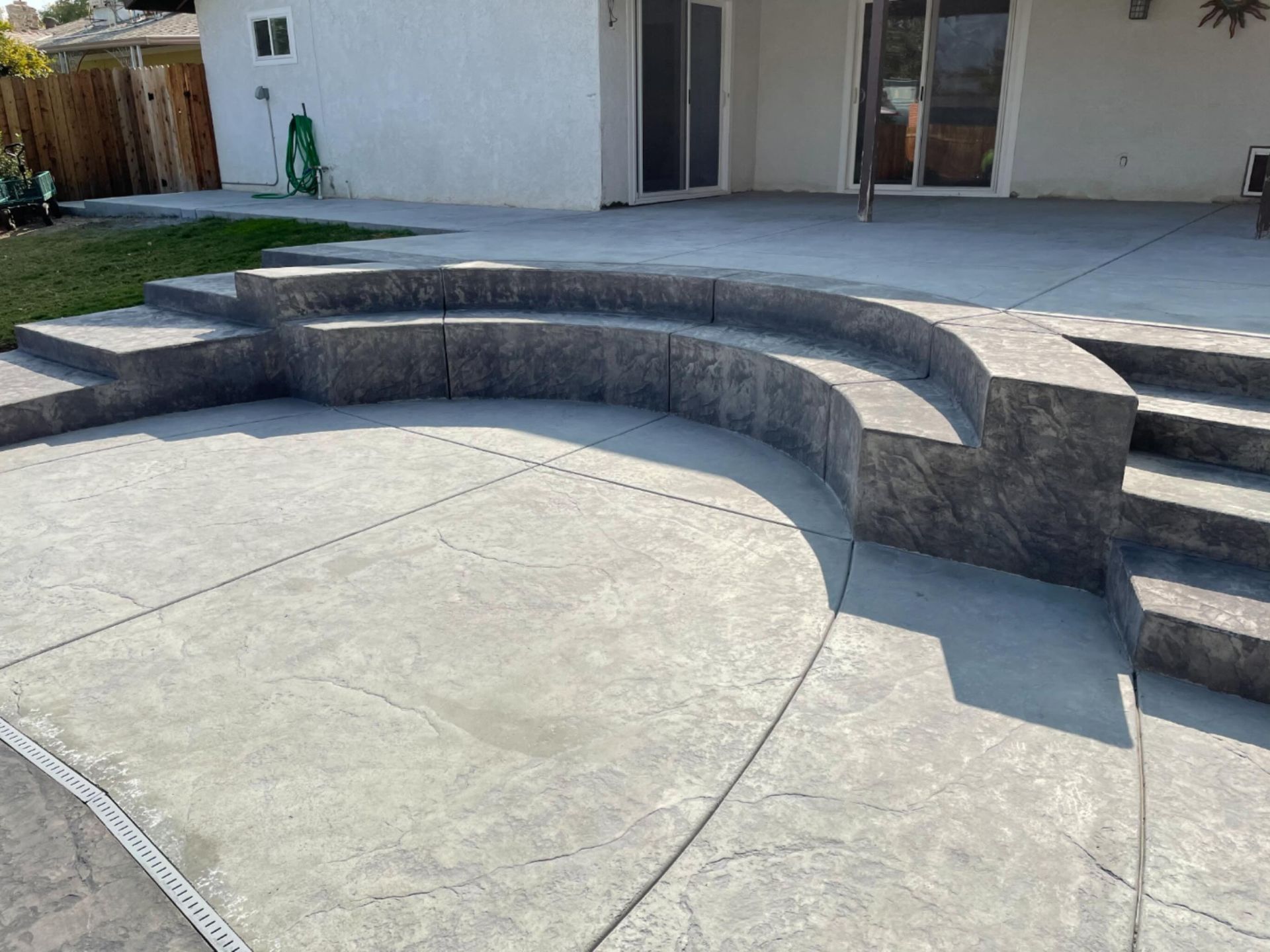
Retaining walls transform sloped areas into level terraces that support landscaping, seating areas, or garden beds that weren't possible on unimproved grade. The structure stops soil migration that previously created bare patches downslope and sediment deposits in drainage swales or against foundations. Behind the wall, backfill is compacted in layers and drainage aggregate is placed adjacent to the wall face, creating pathways for water to exit through weep holes rather than saturating retained soil.
After installation, you'll notice defined elevation changes that create distinct zones in the yard rather than continuous slopes that limit usability. Erosion stops along the wall face, and water exits through designed drainage points instead of washing soil across hardscaping or into planting beds. The wall face can be finished with form liners that add texture or left with standard smooth concrete depending on aesthetic goals, and the top surface provides a level reference for adjacent patios, walkways, or landscape edging.
Retaining wall projects suit both residential properties managing natural grade changes and commercial sites where parking areas or building pads require cutting into existing slopes. Walls can be designed as single structures or tiered systems where extreme grade changes exceed the practical height for a single wall, which is typically limited by soil conditions and local building requirements.
What Property Owners Usually Ask
Questions about structural requirements, drainage management, and design options arise when homeowners evaluate retaining wall projects.
How tall can a retaining wall be built?
Wall height is governed by soil conditions, lateral pressure from retained material, and local building codes, though most residential walls range from three to six feet before engineering review and permits become necessary.
What causes retaining walls to fail?
Failure typically results from inadequate drainage that allows hydrostatic pressure to build behind the wall, insufficient reinforcement for the retained height, or poor soil bearing capacity beneath the footing.
Why does drainage matter for retaining walls?
Water accumulating behind retaining walls creates lateral force that can exceed design limits, causing the wall to tilt, crack, or collapse if drainage systems aren't integrated during construction.
Can retaining walls support landscaping features?
Retaining walls are designed to hold soil and manage specific loads, so adding planters, benches, or other features requires accounting for additional weight during the design phase.
What's involved in site evaluation?
Site evaluation includes measuring slope angle, testing soil bearing capacity, identifying groundwater levels, and determining how drainage will be managed both behind the wall and across the property.
S & L Concrete LLC evaluates slope conditions and drainage challenges during initial property visits, providing detailed recommendations that address both structural requirements and how retaining walls integrate with your landscape design. Contact us to discuss your hillside property's specific grading concerns and review options for creating usable outdoor space.